


iCoder CPT RVU ICD10 HCPCS NDC
4.36.00 Reviews
App Specs
- Version
- 2.0.3
- Updated On
- License
- Free
- Downloads
- 10,000+
- Developer
- StarInix
- Categories
- Medical
- Platform
- Android
Screenshots
 Analysis by AppCompare
When I opened iCoder CPT RVU ICD10 HCPCS NDC, I immediately understood that it is aimed at a very specific kind of medical reference work. This is not a general symptom checker, appointment tool, or patient education app. It is a compact reference app for people who regularly deal with coding, reimbursement values, procedure terminology, laboratory fees, medication identifiers, or orthopedic information.
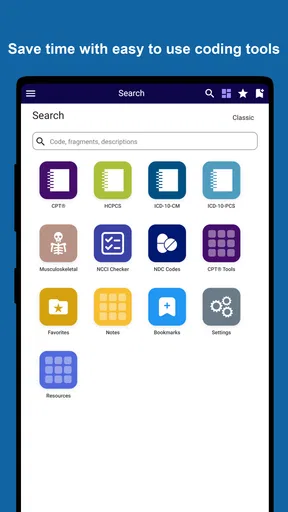
That narrow focus is its main appeal. Instead of trying to cover every part of healthcare, the app brings several professional reference areas into one place: CPT-4, RVU, ICD-10-CM, ICD-10-PCS, HCPCS, orthopedics, lab fees, and NDC. In my experience, that makes it more useful as a quick lookup companion than as a complete replacement for an institutional coding platform.
StarInix presents the app as a free medical tool, and it is suitable for Everyone from an age-rating perspective. It runs on Android devices using version 8.0 or later. The current release is 2.0.3, while the app first appeared on January 5, 2022. Those details matter because this is the kind of reference tool people may want to keep on an older work phone rather than reserve for a brand-new device.
How the app fits into real medical reference work
I’d use this section to look at where iCoder can sit in a real reference routine: as a convenient first stop for sorting a coding question, rather than the final authority for a claim. I’ll also consider how to keep that role clear when a device is shared, so quick access doesn’t blur the line between one person’s work and another’s.
A focused workspace rather than a broad healthcare app
The best way to think about this app is as a pocket reference shelf. A coder checking a procedure code, a billing worker reviewing a reimbursement-related value, or a student learning how medical classification systems relate to one another can use it without opening several unrelated tools. The combination is more practical than the short store description might suggest, because the categories cover different stages of the same administrative workflow.
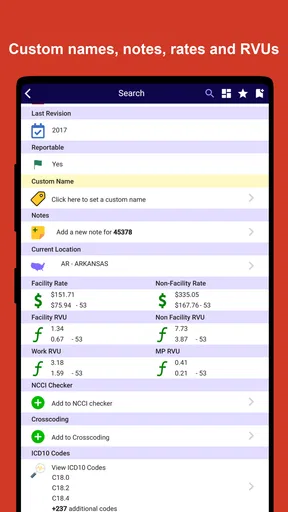
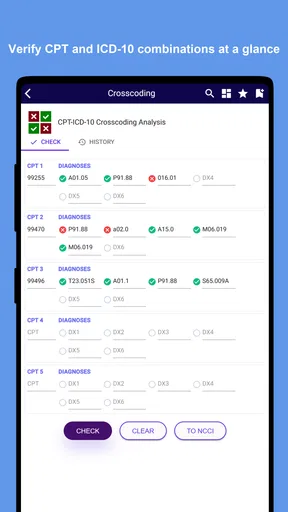
For example, a user might begin with an ICD-10-CM diagnosis reference, move to a CPT-4 procedure reference, and then check RVU information while reviewing the financial side of a claim. Someone working with supplies or medications may instead need HCPCS and NDC references in the same sitting. The app’s value comes from reducing that switching between separate reference sources.
I would not treat it as a clinical decision-maker. Its subject matter is medical, but the useful work here is classification and reference, not diagnosis or treatment advice. That distinction is important for patients: seeing a code or abbreviation in the app does not explain what a doctor has concluded about an individual case.
Worth Reading Before You Choose

Flipboard Shows What News Apps Must Do Beyond the Feed

Switching to Android Auto Means Rethinking Your Driving Routine

Google Calendar Makes a Crowded Week Easier to Manage

Ludo King Makes the Most of the Minutes Between Plans

Baby Panda World Brings Quick Play to Modern Phones, but Its Game Library Feels Busy

ESPN’s Live Game View Makes Following Close Games Easier
Who is most likely to benefit
This is a sensible download for medical billing learners, coding students, office staff, healthcare administrators, and professionals who need a fast second reference while working away from a full desktop system. It can also help someone who is trying to understand the structure of a claim or decode terminology encountered in paperwork.
The app is less convincing for a patient who only wants to understand one diagnosis from a bill. A general medical dictionary or a provider’s explanation will usually be easier to follow. Likewise, a hospital coding department with access to a large subscription database may find this app too limited for detailed compliance work, payer-specific rules, or official auditing.
That trade-off is not necessarily a flaw. A small reference app can be valuable precisely because it is quicker and less intimidating than a large professional platform. The important thing is to use it for orientation and lookup, then verify consequential coding decisions through the authoritative resources required by your workplace.
What the included reference areas mean in practice
The range of subjects can seem dense at first, so I found it helpful to separate them by task. CPT-4 is associated with procedures and professional services. RVU information is relevant when considering the relative value assigned to services. ICD-10-CM is commonly used for diagnosis classification, while ICD-10-PCS is associated with inpatient procedure coding. HCPCS extends procedure and supply coding, and NDC identifies medications at the product level.
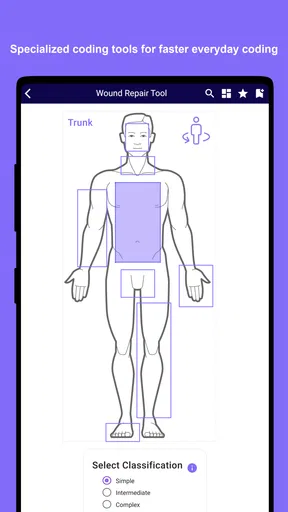
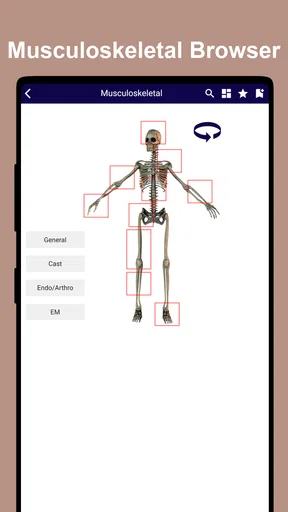
Orthopedics and lab fees add more specialized reference paths. That makes the app particularly interesting for users who frequently encounter musculoskeletal procedures or laboratory billing rather than only general office visits. The inclusion of NDC is also useful when a medication-related question sits beside a billing question, although users should still be careful about confusing a product identifier with a dosage instruction or clinical recommendation.
One practical tip is to decide what question you are asking before searching. “What diagnosis does this represent?” points toward ICD-10-CM. “What service was performed?” points toward CPT-4 or HCPCS. “What medication product is this?” points toward NDC. This simple separation prevents the common mistake of searching the wrong code family and assuming that a result from one system can be substituted for another.
How I would use it during a normal workday
Imagine reviewing a claim after a patient visit. The paperwork contains a diagnosis, a procedure, a supply line, and a medication reference. Rather than jumping between a browser, a coding manual, and a separate drug database, I would use the app to organize the initial lookup: identify the diagnosis family, inspect the procedure reference, check whether the supply belongs under HCPCS, and use the NDC section when the medication identifier needs clarification.
The important word is “initial.” I would not submit a claim solely because a code appears in a mobile reference. I would compare the result with the current coding guidance, payer requirements, and the documentation attached to the encounter. The app can shorten the first part of the investigation, but it cannot replace professional judgment or the source material used for final validation.
A student could use the same workflow differently. Instead of looking for a single answer, the student could compare how one clinical event is represented across diagnosis, procedure, and reimbursement-related systems. That makes the app more useful as a learning aid than simply memorizing isolated codes. Keeping short notes outside the app about why a code belongs to a particular family would make study sessions more productive.
What the current release tells me
The current version, 2.0.3, shows that the app has moved beyond its original release rather than remaining untouched since launch. That is a positive sign for an app built around reference material, because users reasonably expect maintenance when coding systems and medical terminology evolve.
At the same time, a version number alone does not tell me that every code set, fee schedule, or classification detail is current for every jurisdiction and payer. Reference apps have a difficult maintenance burden: different systems update on different schedules, and a seemingly small change can affect how a professional interprets a result. I would therefore view the release as evidence of ongoing product evolution, not as a guarantee that it replaces official annual publications or employer-approved databases.
The app’s average rating is 4.3 from around 40 ratings, with 6 written reviews. That is encouraging enough to suggest that early users generally find a practical purpose for it, but the sample is still modest. I would read the rating as a useful signal of overall reception, not as proof that the app will fit every coding workflow.
What changed for someone already using it
For an existing user, the move to version 2.0.3 is most relevant as a maintenance checkpoint. After updating, I would revisit the areas I use most rather than assuming that an update automatically improves every part of the experience. Search a familiar code, open a few entries from different sections, and confirm that the navigation still supports the way you work.
This is especially worthwhile when the app is used in a routine such as checking a procedure first and then moving to RVU information. A change in organization can affect speed even when the underlying reference content remains familiar. I would also make sure that the app opens reliably on the device used for work and that the text remains readable without forcing constant zooming or rotation.
New users should approach the current release with the same practical test. Choose a handful of real, non-sensitive examples from your training material and see whether the app helps you locate the relevant reference area quickly. If the process feels natural, it may earn a place beside your main resources. If you still need repeated browser searches to interpret each result, it may be better as a backup than as your primary tool.
The main friction: breadth does not equal depth
The app covers many specialized areas, but that breadth creates an unavoidable question: how deep is each section? A tool that includes CPT-4, ICD-10-CM, ICD-10-PCS, HCPCS, NDC, orthopedic references, laboratory fees, and RVU information may be convenient, yet convenience is not the same as a full coding environment.
In a professional setting, I would want clear confidence about update cycles, source authority, search behavior, contextual guidance, and the handling of code revisions. I would also want to know how quickly a result can be compared with documentation and payer rules. When those needs become central, a dedicated coding platform, official manual, or employer-provided database is likely the stronger choice.
The in-app purchase range also changes how I would evaluate the free download. The app itself is free, but individual in-app items are listed from $79.99 to $249.99 each. That is a substantial commitment, so I would inspect exactly what a paid item provides before buying. For casual curiosity, the free experience may be enough; for work, the purchase only makes sense if it supplies reference depth or convenience that justifies the cost.
Because of that pricing structure, I would not recommend purchasing immediately after installation. First, identify the specific section you need, test the free portion with representative searches, and compare the paid option with the resources already available through your employer or school. A costly duplicate is poor value, while a focused reference that fills a genuine gap may be worthwhile.
Three useful habits that make the app safer and more effective
My first recommendation is to treat every lookup as a two-step process: find the candidate code in the app, then validate it against the documentation and current official guidance. This is more important for similar-looking code families, where a plausible result can still be inappropriate for the setting or the service actually documented.
Second, keep diagnosis, procedure, supply, medication, and reimbursement questions separate in your notes. Mixing them together makes it easy to assume that an ICD-10-CM diagnosis should directly determine a CPT-4 procedure, or that an NDC identifier describes a billable service. The app brings these references together, but the user still has to preserve the distinctions between them.
Third, use the orthopedic and lab-fee sections as focused starting points rather than assuming they cover every specialty scenario. If your daily work is concentrated in those areas, build a small personal checklist of the terms and code families you encounter most often. That turns the app from a collection of categories into a repeatable workflow and makes gaps easier to notice.
Privacy and professional responsibility
I would avoid entering identifiable patient information into any reference search. A code lookup normally does not require a patient name, date of birth, account number, or clinical narrative. Using de-identified examples protects the patient and keeps the task focused on classification rather than personal data.
This also clarifies the app’s role. It is a reference aid, not a secure patient record system, not a communication channel with a clinician, and not a substitute for medical advice. If a patient is trying to understand a bill, the safest next step may be asking the provider or insurer to explain the line item, then using the app only to become familiar with the terminology.
How it compares with common alternatives
Compared with a web search, the app offers a more concentrated environment. A search engine can return current official pages, payer documents, educational articles, and unrelated results all at once. That breadth is useful when researching a complicated issue, but it can slow down a simple lookup. iCoder is more appealing when the goal is to reach a relevant reference category quickly.
Compared with printed coding manuals, the app is easier to carry and potentially faster for a quick check. Printed references remain valuable for structured study, annotations, and formal workplace use, especially when a complete edition is required. I would choose the app for portability and the manual or official database when completeness and documented authority matter more than convenience.
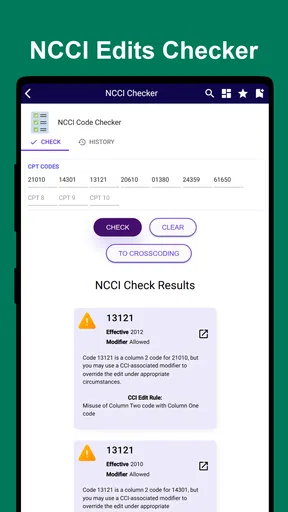
Compared with a large subscription coding platform, this app appears better suited to lightweight reference work. A full platform may offer richer search tools, detailed guidance, edit checks, payer context, and stronger update documentation. Those features can justify a higher cost for professional teams. The mobile app makes more sense for learners, occasional users, or workers who need a secondary reference beside a larger system.
Who should skip it
I would skip this app if you want patient-friendly explanations, symptom triage, medication advice, or a way to manage appointments. Its medical category should not be mistaken for general healthcare functionality. I would also hesitate if your work requires final coding authority, exhaustive revision tracking, or payer-specific validation and you already have a trusted professional platform.
It may also be the wrong choice for someone unwilling to verify results. Medical coding is detail-sensitive, and a convenient lookup can create false confidence when the documentation does not support the selected code. The app is most useful for a careful user who understands that a reference result is a starting point, not automatic approval.
What I would watch in future updates
For future releases, I would pay attention to how clearly the app communicates content updates across each reference family. CPT-4, ICD-10-CM, ICD-10-PCS, HCPCS, NDC, RVU material, lab fees, and orthopedic references do not all behave like one unified list. Clear labeling of revision status would make the app more dependable for serious users.
I would also watch the balance between free access and paid items. The current purchase range is high enough that users need a clear reason to upgrade. A transparent explanation of what each item adds, especially for students and small practices, would make the decision easier and reduce the risk of buying a resource that overlaps with an existing subscription.
Finally, I would look for improvements that support cross-reference work without blurring the boundaries between code systems. The strongest future direction would be faster movement from a diagnosis-related lookup to a procedure or reimbursement reference while still reminding users that those relationships require documentation and professional validation.
My recommendation
After using it as a focused medical reference, I see iCoder CPT RVU ICD10 HCPCS NDC as a useful companion for coding learners, billing staff, and healthcare workers who need several terminology systems close at hand. Its free entry point, broad reference scope, Android compatibility from version 8.0 onward, and current 2.0.3 release make it easy to test without committing to a new professional system immediately.
My recommendation is conditional but positive: install it if you need quick orientation across CPT-4, RVU, ICD-10-CM, ICD-10-PCS, HCPCS, NDC, orthopedic, or laboratory-fee references. Use it alongside official guidance, not instead of it. Before paying for an individual item, compare its value with your workplace resources and test whether it genuinely saves time.
For me, the app’s strongest quality is focus. It does not try to be a patient portal or a complete healthcare platform; it concentrates on reference material that is often scattered across different tools. Its real value is fastest when it supports a careful, verification-based workflow. If that matches your needs, it is worth exploring. If you need authoritative, exhaustive coding infrastructure, a dedicated professional alternative will be the better long-term choice.
Pros
- Combines CPT
- RVU
- ICD-10
- HCPCS
- and NDC references in one app.
- Useful for quick code lookups in clinics
- billing offices
- or study sessions.
- Search tools can reduce time spent navigating large coding references.
- Helps compare procedure values and review common medical code details.
- Convenient mobile access when printed coding manuals are unavailable.
Cons
- Coding data may require updates to reflect the latest annual revisions.
- Some advanced references or features may be limited without a subscription.
- Medical coding terminology can feel overwhelming for new users.
- Search results may depend heavily on using the correct code or keyword.
- Should not replace official payer rules
- coding guidelines
- or expert advice.
FAQs for iCoder CPT RVU ICD10 HCPCS NDC
What is iCoder CPT RVU ICD10 HCPCS NDC used for?
iCoder CPT RVU ICD10 HCPCS NDC is a medical coding reference app designed to help healthcare professionals, medical billers, coders, students, and administrative staff look up commonly used coding systems. It brings together references for CPT, RVU, ICD-10, HCPCS, and NDC terminology, making it useful for checking code descriptions, comparing related entries, and supporting everyday coding or documentation tasks.
Does iCoder include complete and officially updated medical code sets?
The app can be helpful as a quick reference, but users should not automatically assume that every code set is complete, current, or an official replacement for licensed coding publications. Medical codes and reimbursement rules change frequently, and coverage policies may vary by payer and location. Before submitting claims or making clinical billing decisions, verify important information against current official sources and applicable payer guidelines.
Can iCoder be used by professional medical coders and healthcare providers?
Yes, iCoder may be useful for professional coders, physicians, nurses, billing specialists, students, and other healthcare workers who need convenient access to coding terminology. Its main value is speed and portability when checking a code away from a desktop reference. However, it should be treated as a supporting tool rather than the only source used for compliance, diagnosis selection, reimbursement decisions, or final claim validation.
Does the app require an internet connection to search CPT, ICD-10, HCPCS, RVU, or NDC information?
Whether an internet connection is required can depend on the app version, the specific database section, and how its content is delivered on your device. Some reference information may be available after installation, while updates, external links, advertisements, or certain search features may require connectivity. Check the current store listing and test the main databases after installation, especially if you plan to use the app in areas with limited service.
Is iCoder CPT RVU ICD10 HCPCS NDC free, and are there any privacy concerns?
Availability and pricing may vary by platform, region, and app version, so review the Google Play or App Store listing before downloading. Also examine the permissions, privacy policy, advertising disclosures, and any in-app purchase details. Since coding reference apps may contain medical terminology but are not necessarily designed to store patient records, avoid entering personally identifiable patient information unless the developer clearly explains how that data is protected.


